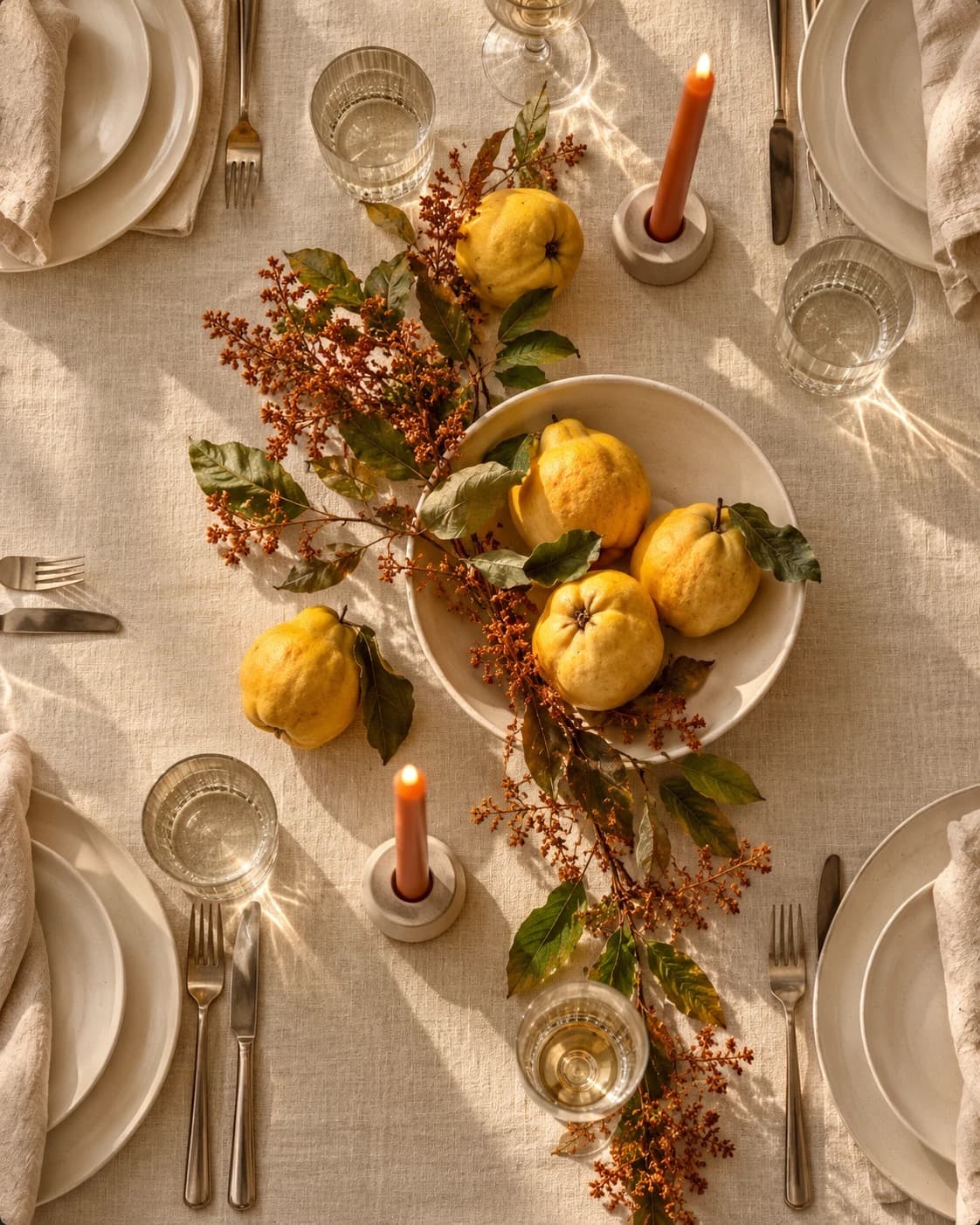
When I think of quince, I think of my grandmother.
I grew up with her, watching her cook and work with whatever the season brought into her kitchen. At the time, I didn’t fully appreciate how much knowledge lived in those everyday gestures. I simply knew that she could take something fresh and turn it into something we would enjoy long after its season had passed.
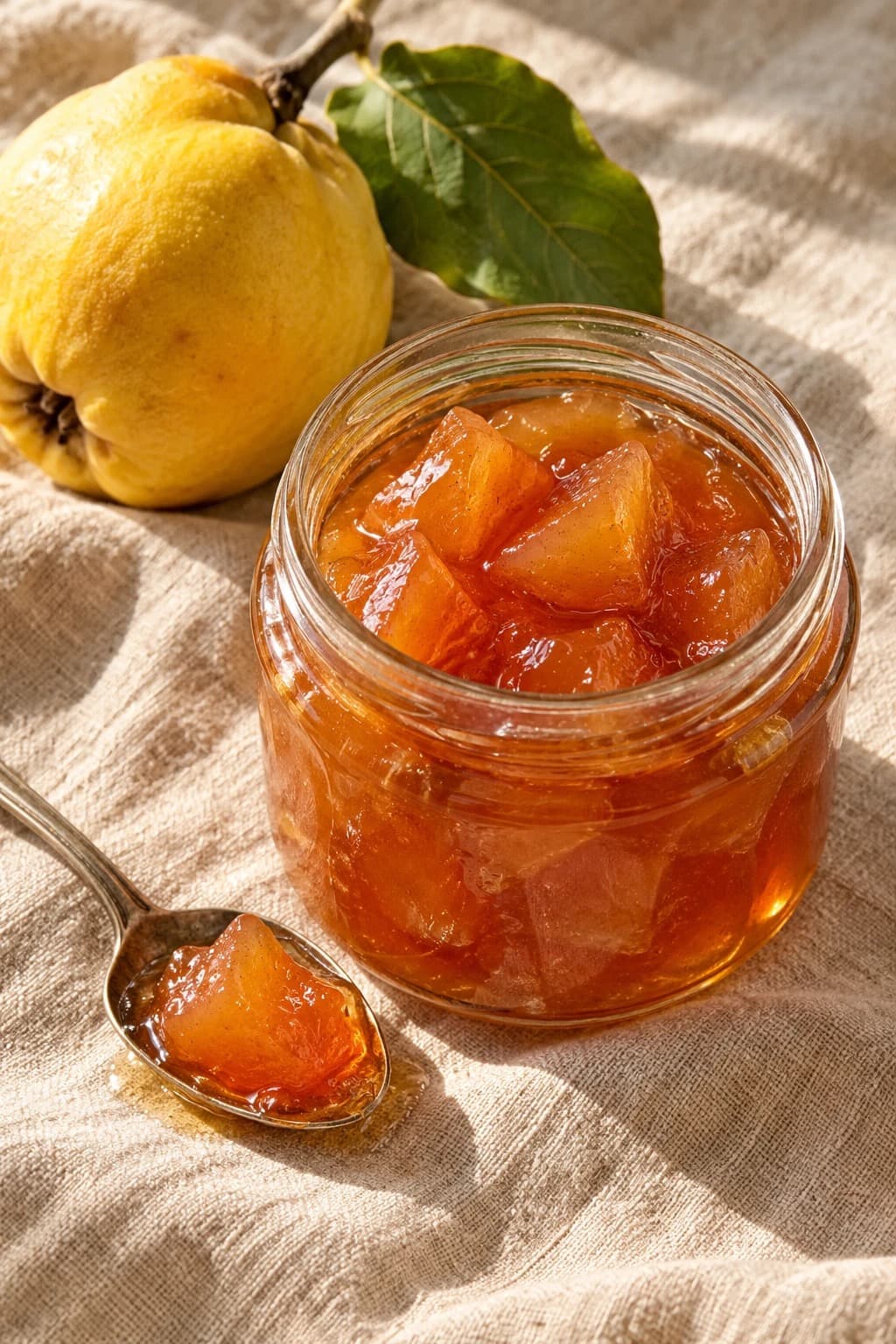
Quince became jam, preserves and syrup. Each preparation offered a different way to enjoy the fruit, carrying a little of autumn into the rest of the year.
Today, as I begin In Season, I find myself returning to those memories with a different understanding. I want to share the ingredients I grew up with, the traditions surrounding them, and the people who taught me to appreciate them. Quince feels like a very personal place to begin.
What my grandmother taught me
It was during COVID, when my grandmother stayed with us for several months through lockdown, that I began to understand the depth of what she knew.
We had time together. Time for me to watch, ask questions and notice things I had taken for granted as a child.
Her resourcefulness extended well beyond the kitchen. When we ordered clothes online because we couldn’t go to the shops, she would alter them herself if they didn’t fit. She knew how to resize, adjust and make something work. It was such a natural response for her.
She came from a generation in which these skills were part of everyday life. People cooked, sewed, repaired and preserved. They worked with their hands and learnt alongside one another. So much knowledge was passed on through the simple act of doing things together.
Looking back, I recognise how much of her I carry in myself: the pleasure of making something, the instinct to feed people, the desire to bring everyone around a table.
There are also things I wish I had paid more attention to. Recipes I would have asked more questions about. Small details I didn’t realise I would one day want to remember.
Many of us have less space for these practices now. Seasonal preserving is no longer an ordinary part of every household, yet I feel there is something valuable in keeping it alive. It gives us a relationship with our ingredients, with the seasons and with the people we learnt from.
A fruit that asks for patience
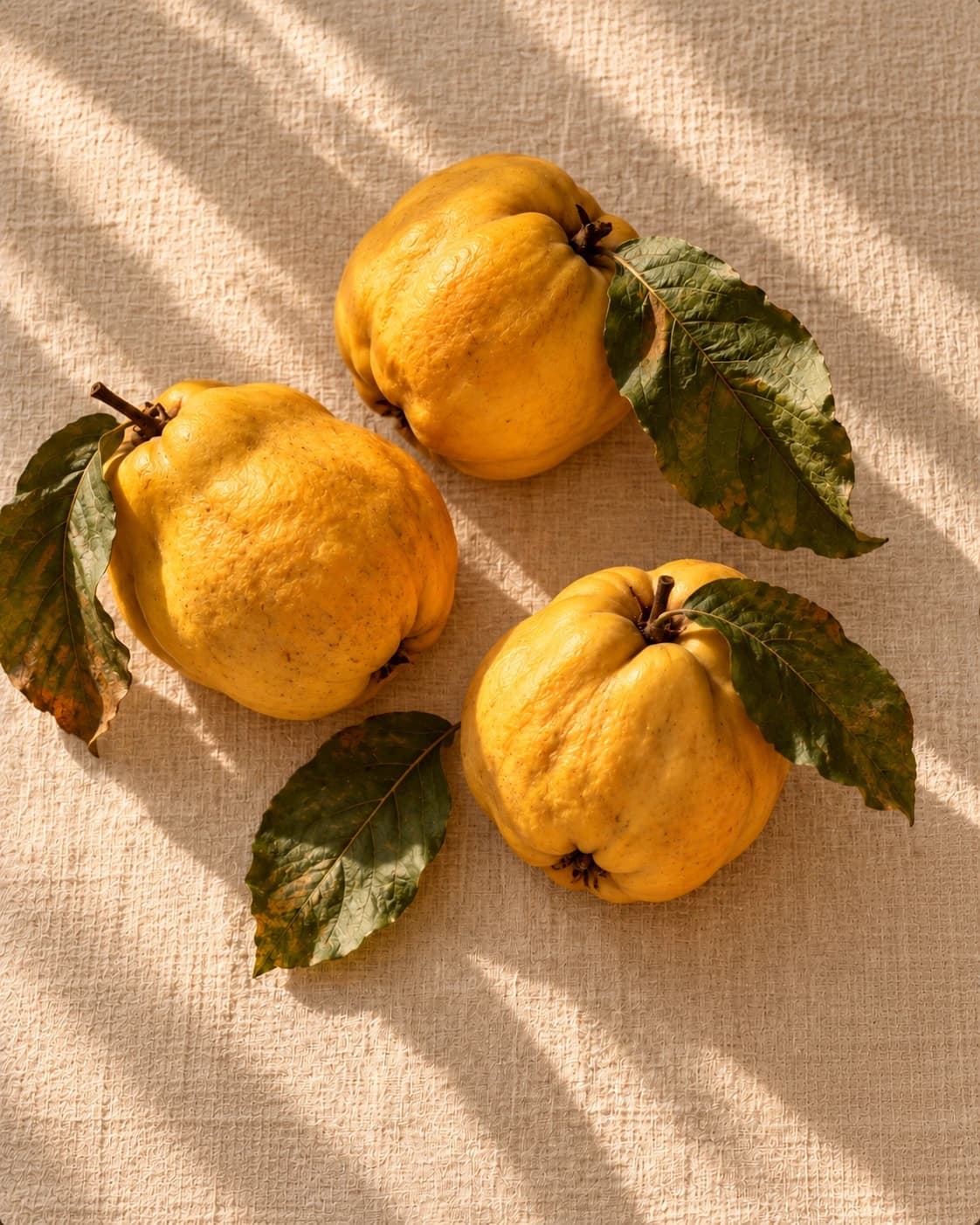
If you haven’t cooked with quince before, it resembles a golden apple or pear, sometimes with a soft down on its skin. In Persian, we call it beh; in Arabic, safarjal.
Its fragrance is beautiful, but its firmness can surprise you. Most varieties are hard and astringent when raw. It takes some effort to cut through the flesh, and at first it gives little indication of what it can become.
Then you begin to cook it.
With gentle heat and enough time, the flesh softens, its flavour mellows and its fragrance deepens. The pale interior can gradually turn pink, then a richer rose or ruby colour, depending on how it is cooked. Watching that change is one of my favourite parts of making quince preserves.
You cannot rush it to the finish. You prepare it, give it the right conditions and allow the process to unfold.
That is what I find so beautiful about this fruit.
A place in our kitchens
Quince has a long history across Iran and neighbouring regions, and it belongs as comfortably in a savoury pot as it does in a jar of jam.
In Persian cooking, it is used in khoresh-e beh, a stew combining quince with meat and, in some versions, yellow split peas. It is also made into preserves and enjoyed in a variety of sweet preparations.
In our family, my mother and grandmother prepared a traditional dish called Tas Kabab, a pot layered with meat and vegetables and left to cook slowly. These are the dishes I love sharing: food that carries a memory, with room for each family to make it in its own way.
Quince’s natural pectin makes it particularly suited to jams, jellies and pastes. Perhaps that is part of why it lends itself so beautifully to preserving: its character changes in the pot, and that change becomes something we can keep and return to.
Transformation, changing cycles and gratitude
For me, the intention quince carries is transformation.
Watching it cook reminds me that meaningful change often happens gradually. There can be a long stretch when very little seems to be happening, even though something is quietly developing.
I recognise that feeling in my own life. There have been periods when I wanted clarity sooner, when I wished I could move more quickly from uncertainty into understanding. I am learning to give those stages more time and to meet myself with a little more patience.
Autumn feels like a natural moment for that reflection. A season is changing. We can pause to consider what has nourished us, what we are ready to release and what we want to carry forward.
It is also, for me, a season of gratitude. I think of my grandmother’s hands, her knowledge and the time we had together. I think of the traditions I inherited before I was old enough to understand their value, and the opportunity I have now to share them.
Beginning a new season
Launching Zahra Collective marks a new chapter in my life, which makes quince a meaningful ingredient for this first edition of In Season.
This next step has taken time. It has involved asking questions, trusting the process and finding the courage to let my work evolve. I am grateful for everything Cooking with Zahra has brought into my life, and I am curious about what can grow from that foundation.
Through In Season, I want to create a monthly invitation to pay attention: to an ingredient, to the stories it holds and to what it might help us notice in ourselves.
We will cook, gather and share what we know. We will revisit traditions and find ways to bring them into our lives today.
And we begin with quince, a fruit I remember from my grandmother’s kitchen, asking us to slow down long enough to appreciate the beauty of becoming.